Visual Characteristics and Cultural Reflections in the Illustrations of Shahnameh-ye Saba
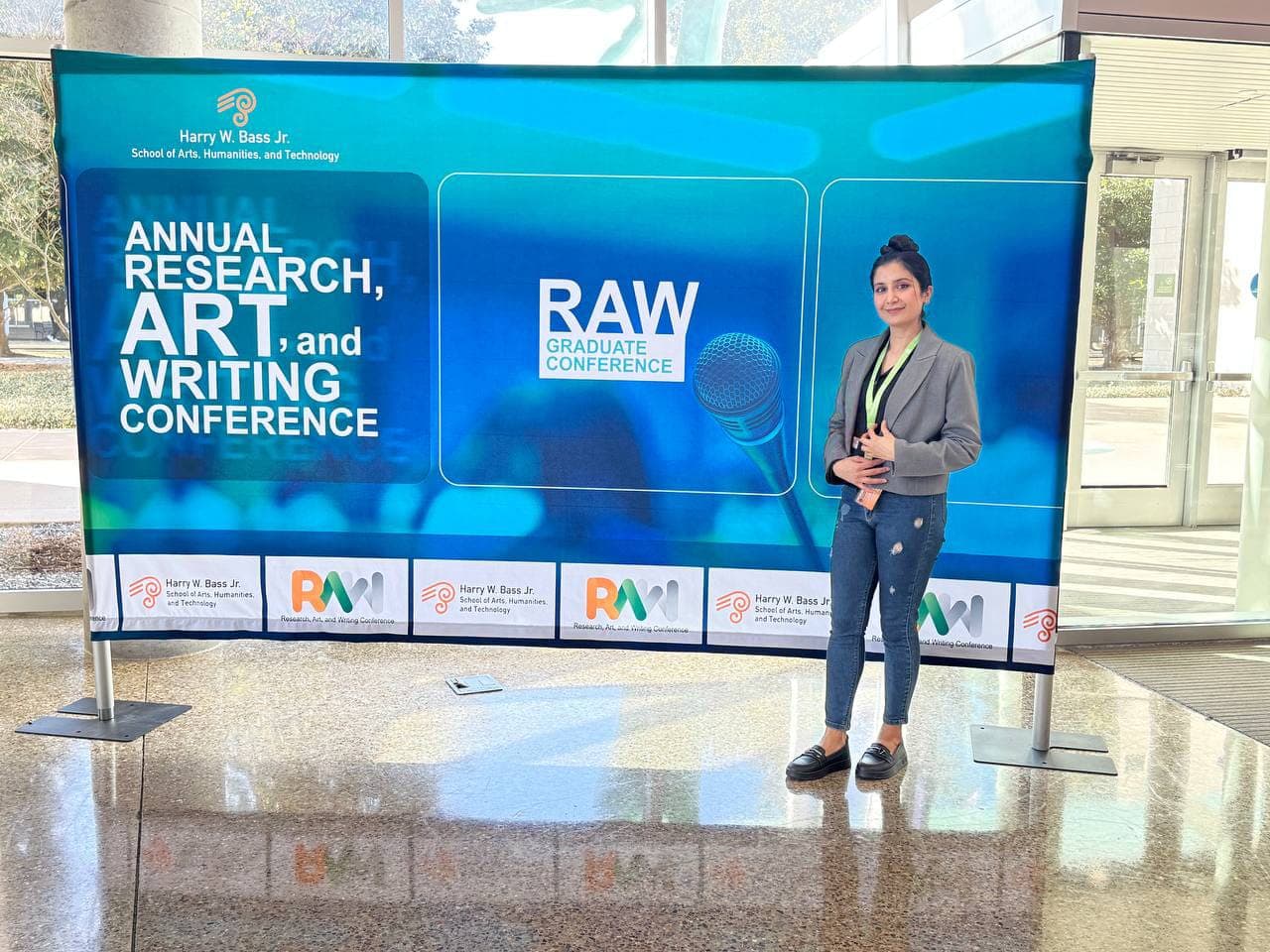
At RAW 2025 (Research, Art, Writing) at the University of Texas at Dallas, I presented my research on the visual language of Shahnameh-ye Saba, a nineteenth-century Persian manuscript from the Qajar period, held at the Malek National Library and Museum in Tehran.
The manuscript I studied was written by Fath-Ali Khan Kashani, known as Saba, a court poet under Fath-Ali Shah Qajar. The work draws on Iran's long tradition of epic storytelling but adapts it to the political world of nineteenth-century Iran. It presents Fath-Ali Shah through the language of epic poetry, placing a contemporary ruler alongside the heroic figures of Iran's legendary past. At a time when the newly established Qajar dynasty was working to strengthen its authority, this connection between the present ruler and Iran's heroic past carried an important political meaning.
In my research, I closely examined the manuscript's illustrations, focusing on composition, color, character design, clothing, and the way historical scenes and figures were represented. I also compared the Malek manuscript with three other illustrated copies of Shahnameh-ye Saba: a manuscript in the National Library of Tabriz, one held by the British Library in London (IO Islamic 3442), and another in the Majles Library in Tehran (no. 1104).
The comparison began with an observation I made while studying the Malek manuscript: although these manuscripts were created by different artists and at different times, their illustrations share a surprisingly similar visual language. The same types of compositions appear repeatedly, along with similar ways of enlarging the Shah, depicting his clothing and jewelry, and positioning him within the scene.
Seeing these similarities made me look beyond style and ask why the images were so closely connected. I began to see them as part of a deliberate visual approach to presenting Fath-Ali Shah as a powerful and legitimate ruler. The images were not simply illustrating the stories; they also shaped how the Shah was meant to be seen. What interested me most was how the text and images worked together. The poetry and paintings reinforced each other, creating a strong and consistent image of the king.
Through this research, I explored how historical visual traditions can be adapted to tell new stories, shape ideas of power and identity, and give political meaning to images.