Visual Characteristics of Selected Illustrations from the Shahanshahnama-yi Saba
For my graduate research in Illustration, I studied a Qajar-era Persian manuscript: the Shahanshahnama-yi Saba, an epic poem written about Fath Ali Shah Qajar, of which several illustrated manuscripts survive. I focused on manuscript no. 5998 at the Malek Library in Tehran, which contains 25 illustrations depicting battles, court ceremonies, and the victories of Fath Ali Shah.
Accessing this manuscript was itself part of the challenge. At the time, there was no independent study specifically focused on this manuscript. During the COVID-19 pandemic, despite the restrictions at the time, I personally went to the Malek Library and completed the necessary administrative process. In the end, I was not given permission to view the original manuscript directly and was only able to access images of the illustrations. These images became the main source for my analysis.
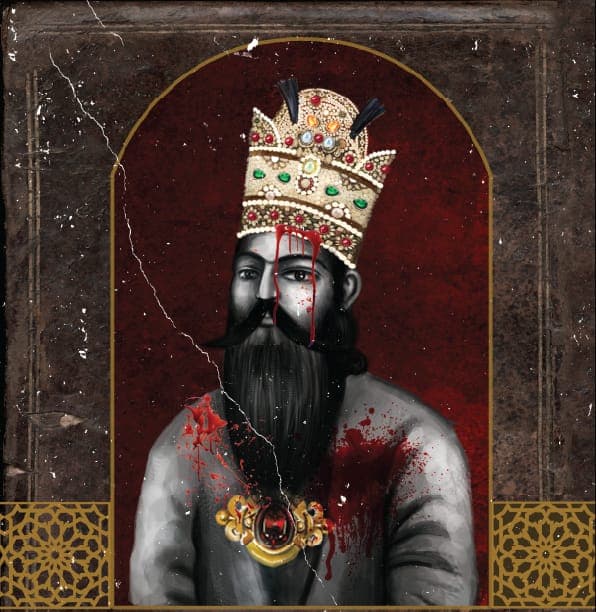
As I studied the illustrations, what caught my attention most was the distinct visual identity of Qajar art: a recognizable style and visual language that appears clearly across the paintings of this period. Fath Ali Shah strongly supported the arts and literature, and much of the visual language of the time served the interests of its patrons, particularly the Shah and the court. In other words, alongside their aesthetic value, these works of art also functioned as a way of promoting and reinforcing the power of the ruling dynasty. This can be seen repeatedly and clearly in the surviving work from this period.
It was this repetition of visual patterns that made me look at the illustrations differently: not simply as visual accounts of historical events, but as deliberate ways of constructing and reinforcing the image of a powerful king in the minds of viewers. My research explores this idea: how composition, color, and the placement of figures within an image can become tools of power, rather than simply decorative elements.
This question continues to be at the center of my interests as an artist and researcher: how images carry cultural memory, and how visual languages from the past can be revisited and used to tell new stories.
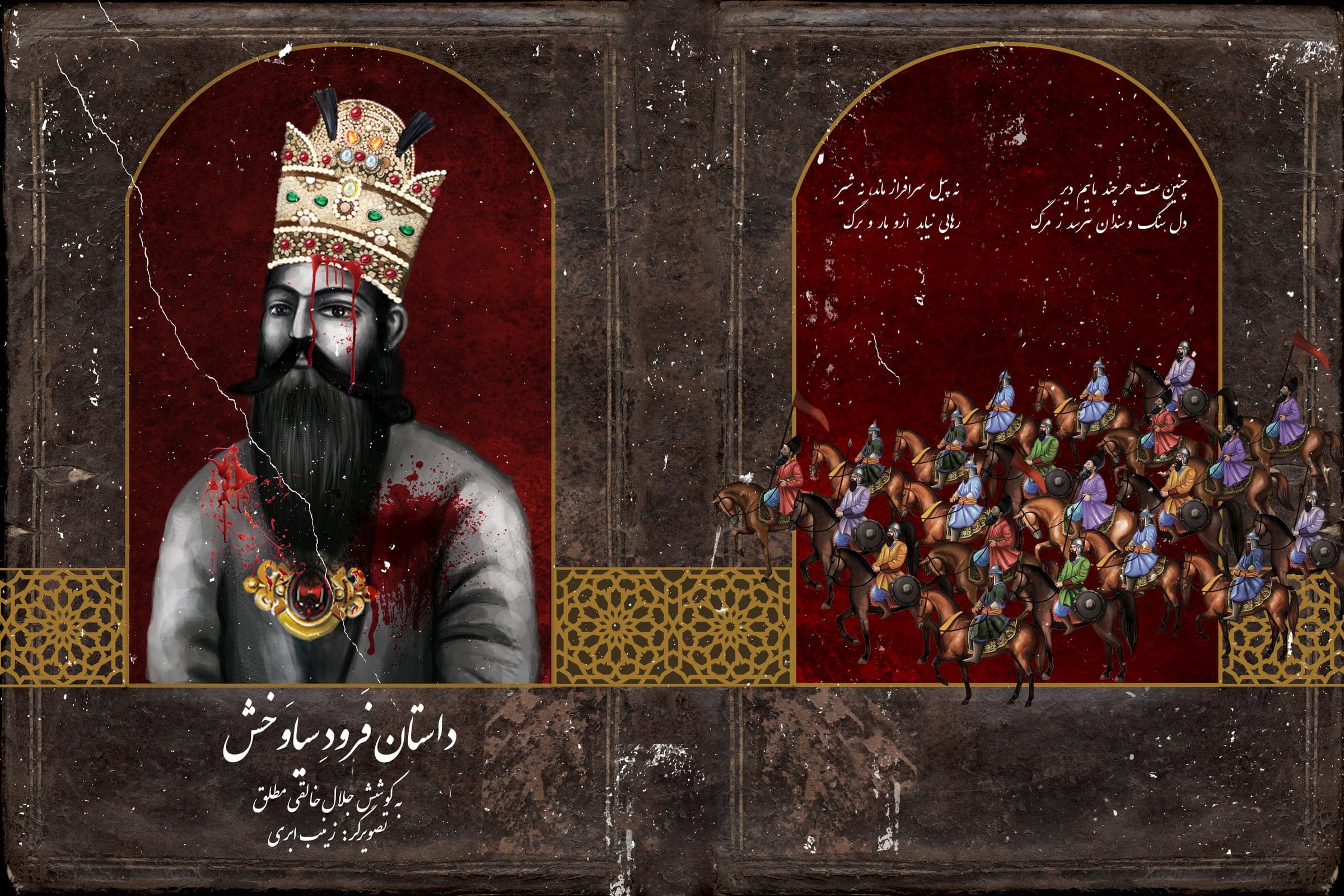
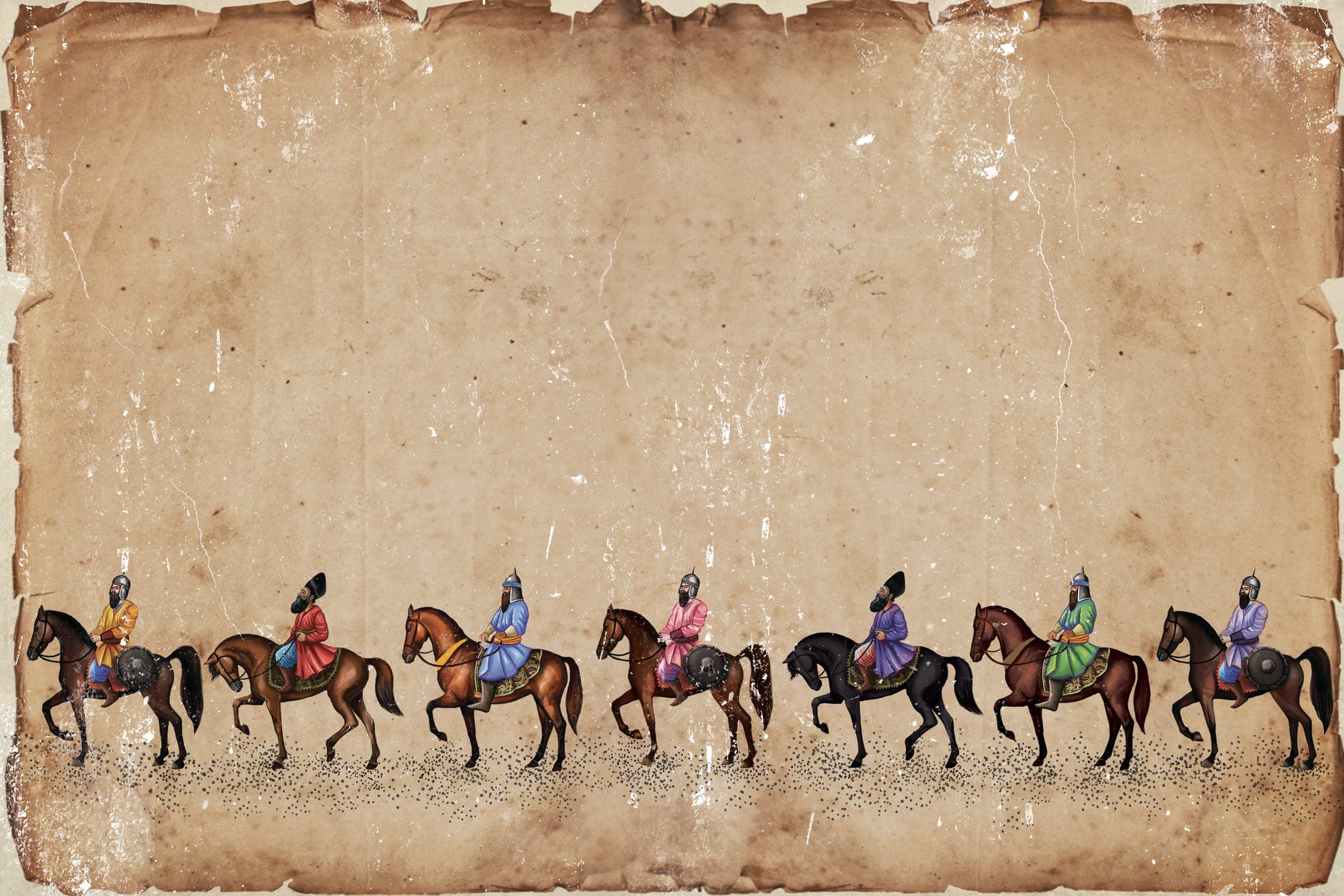
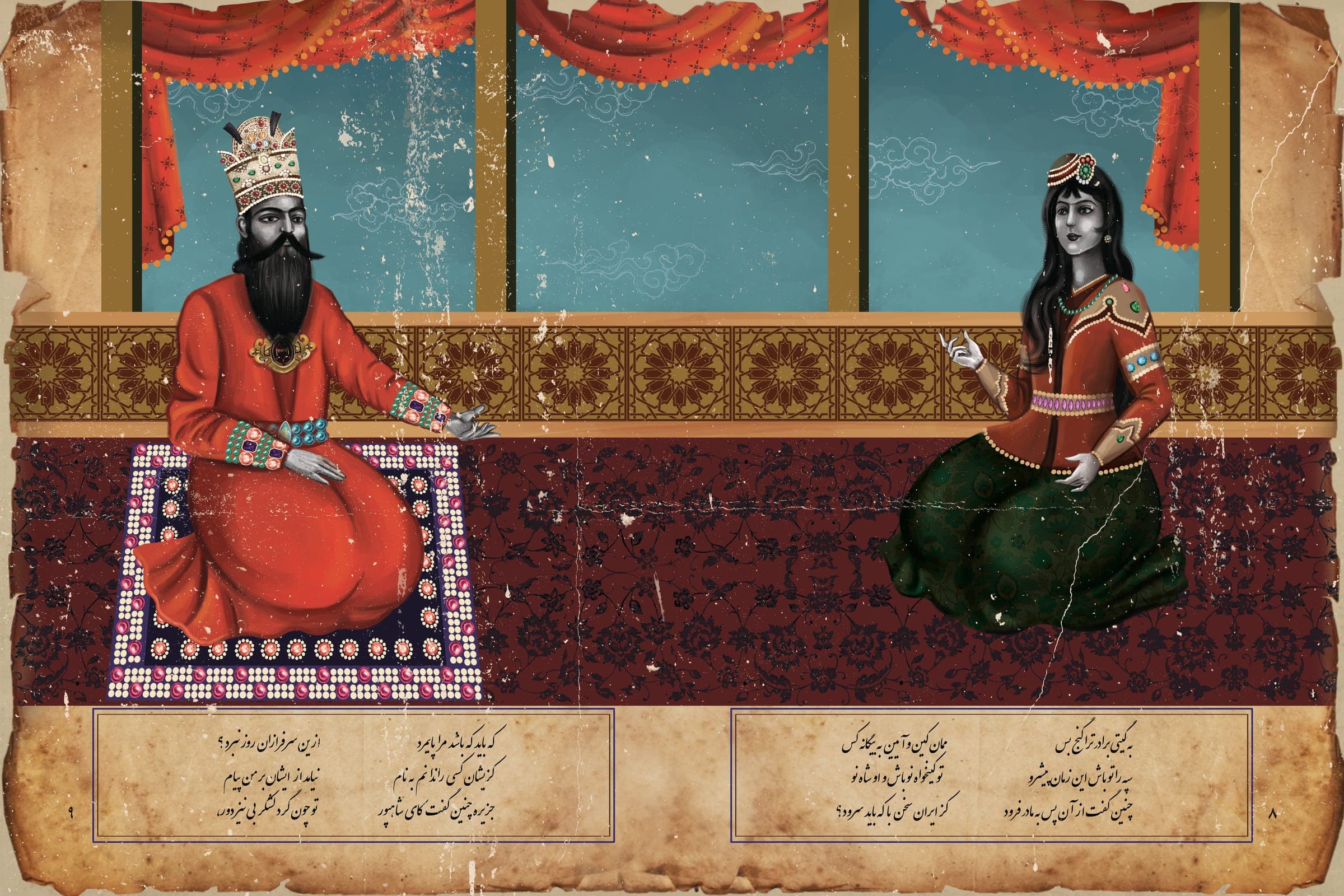
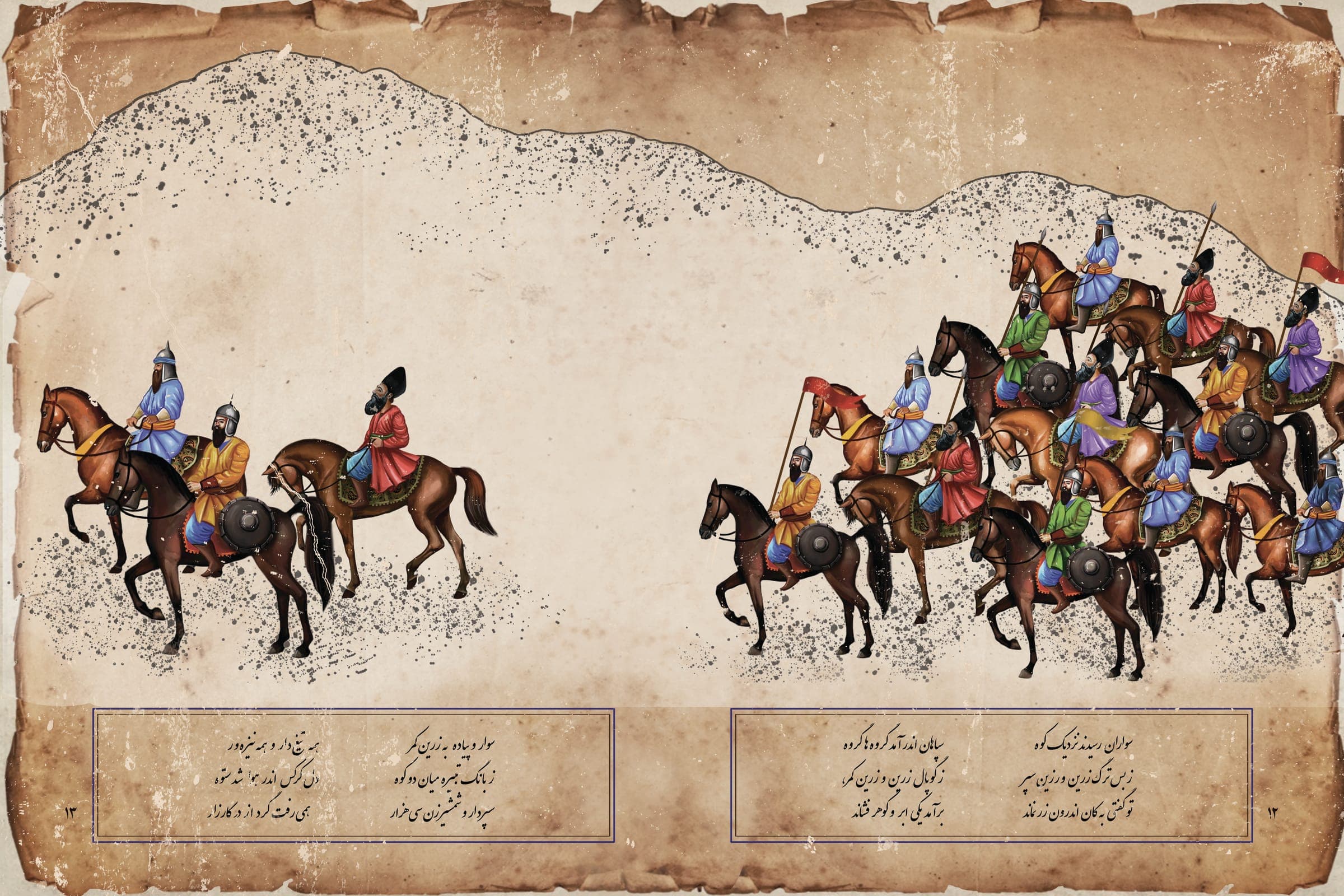
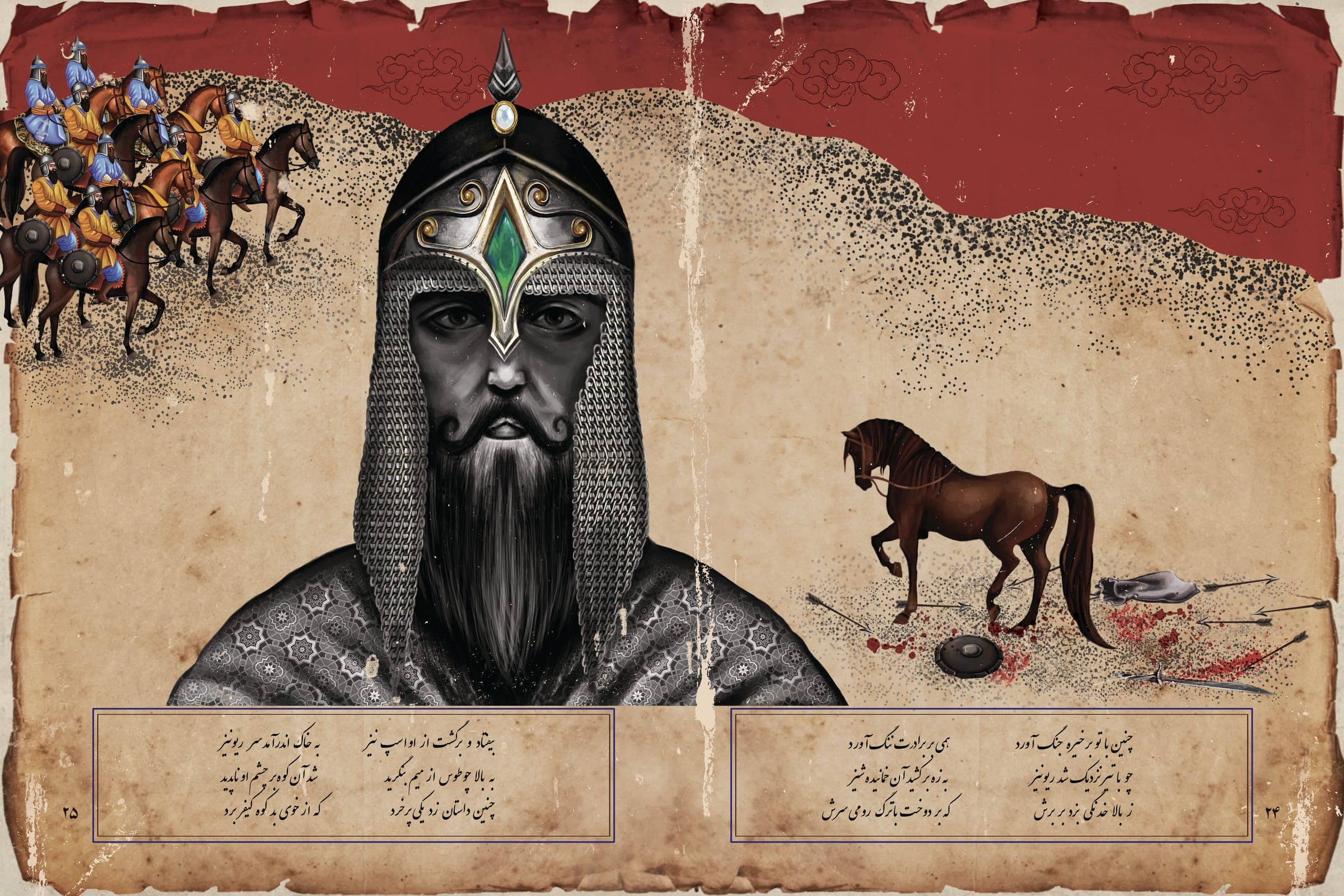
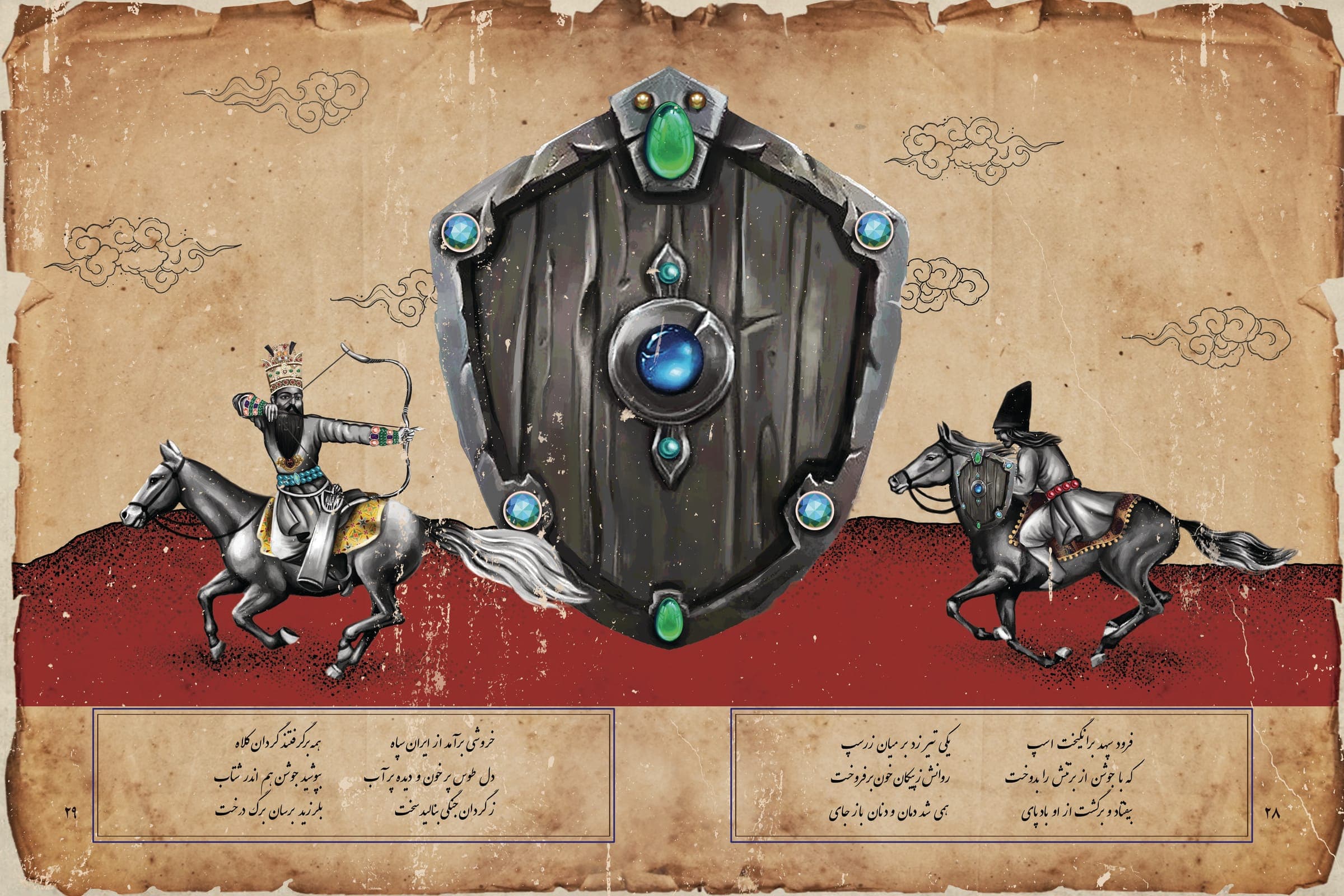
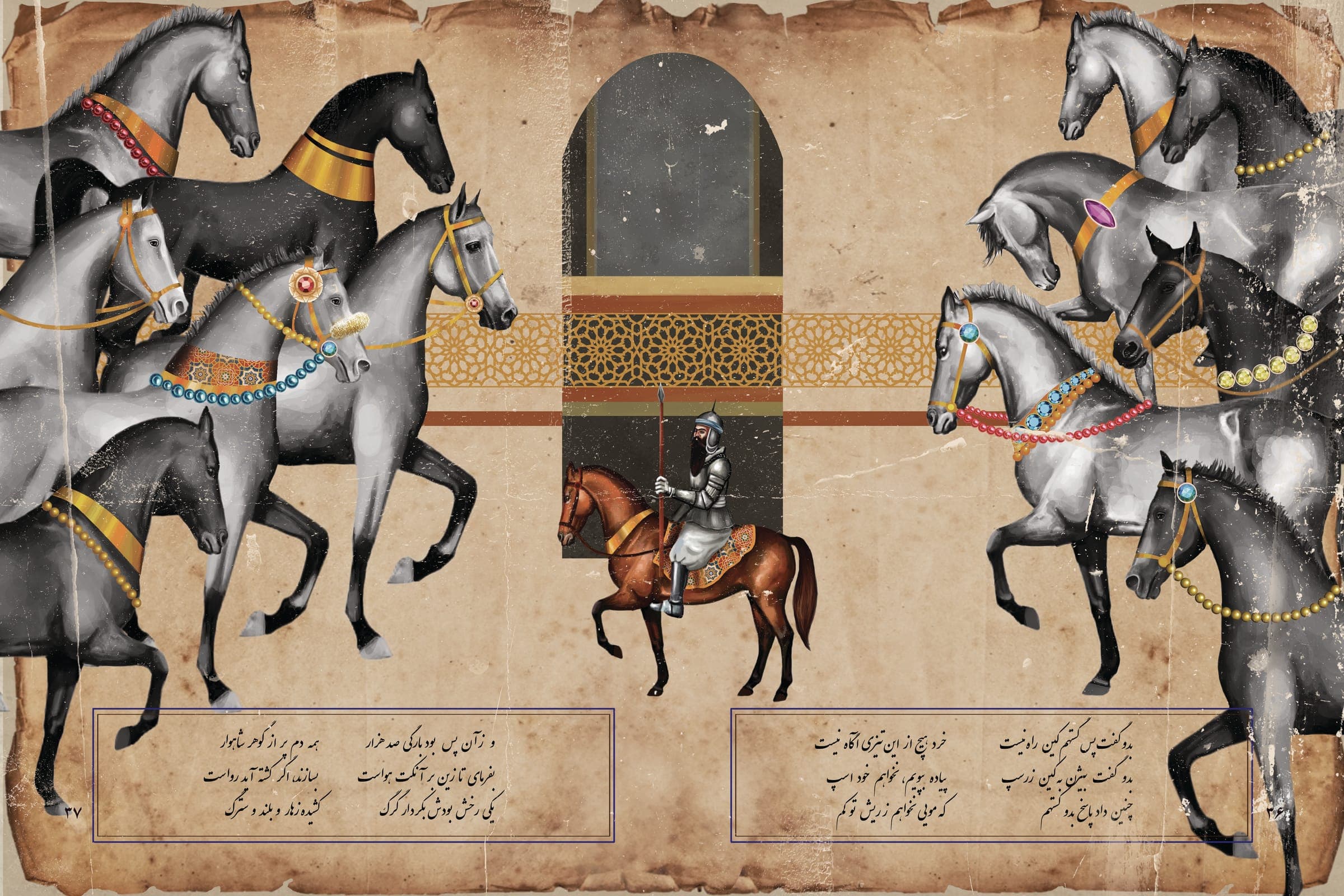
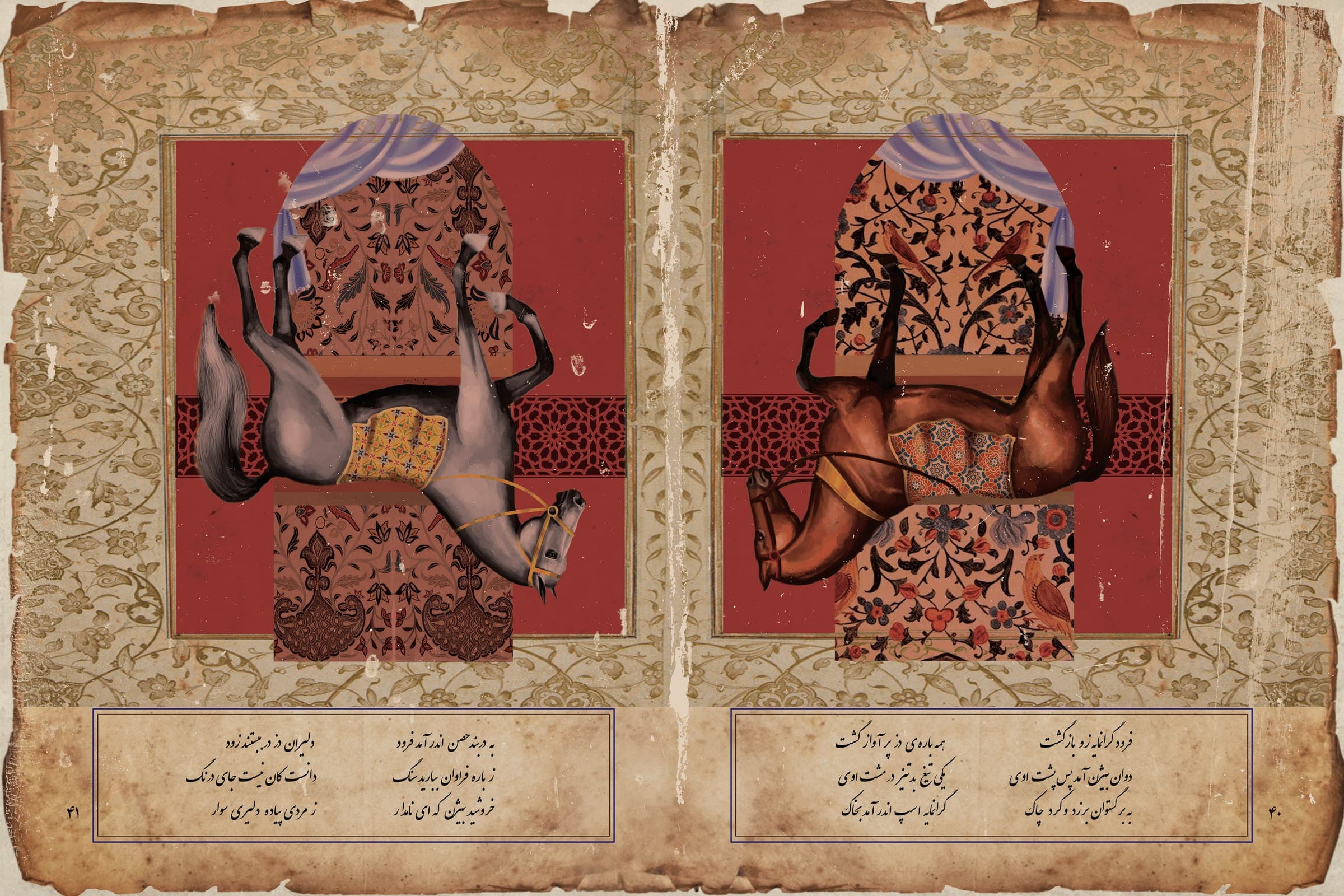
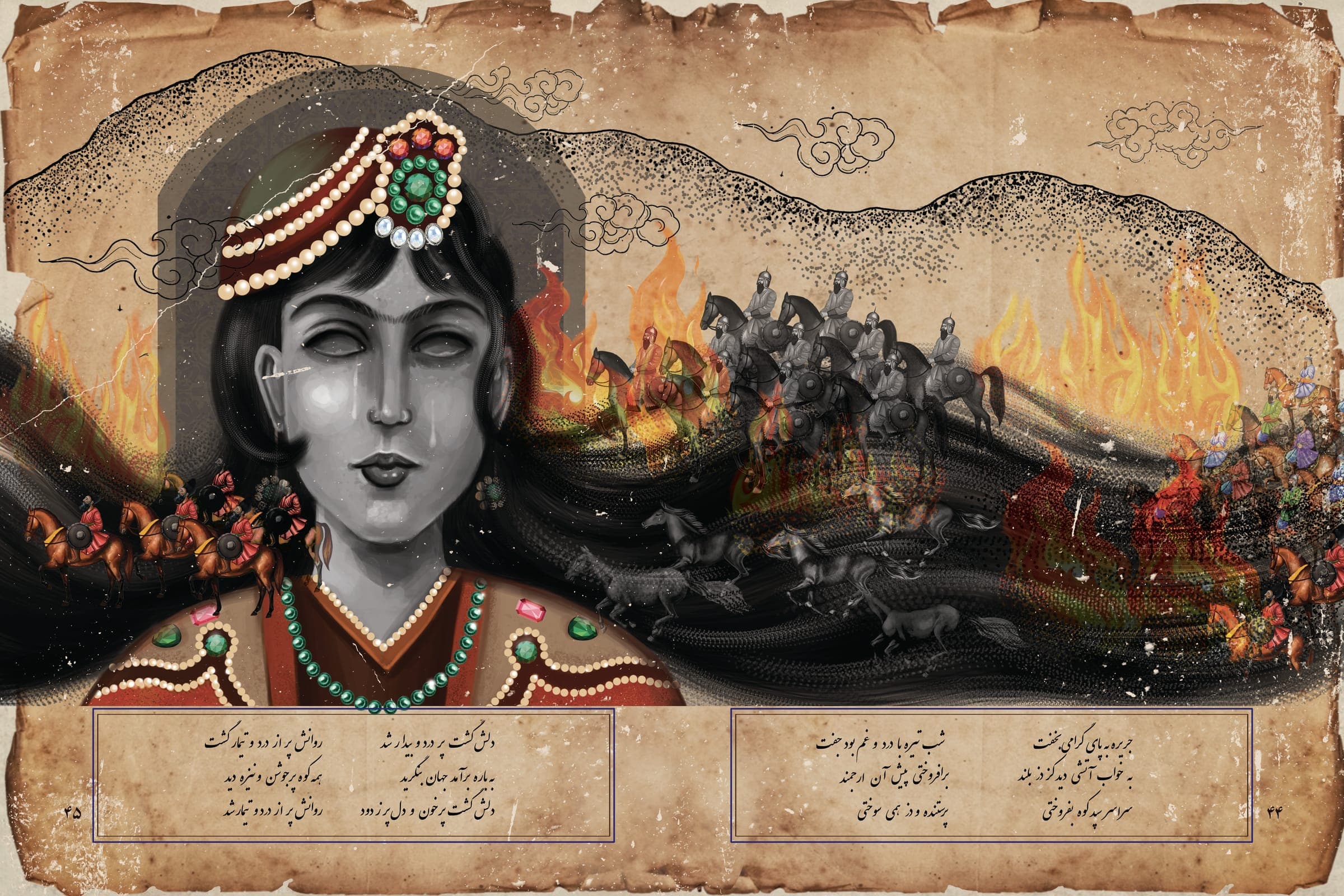
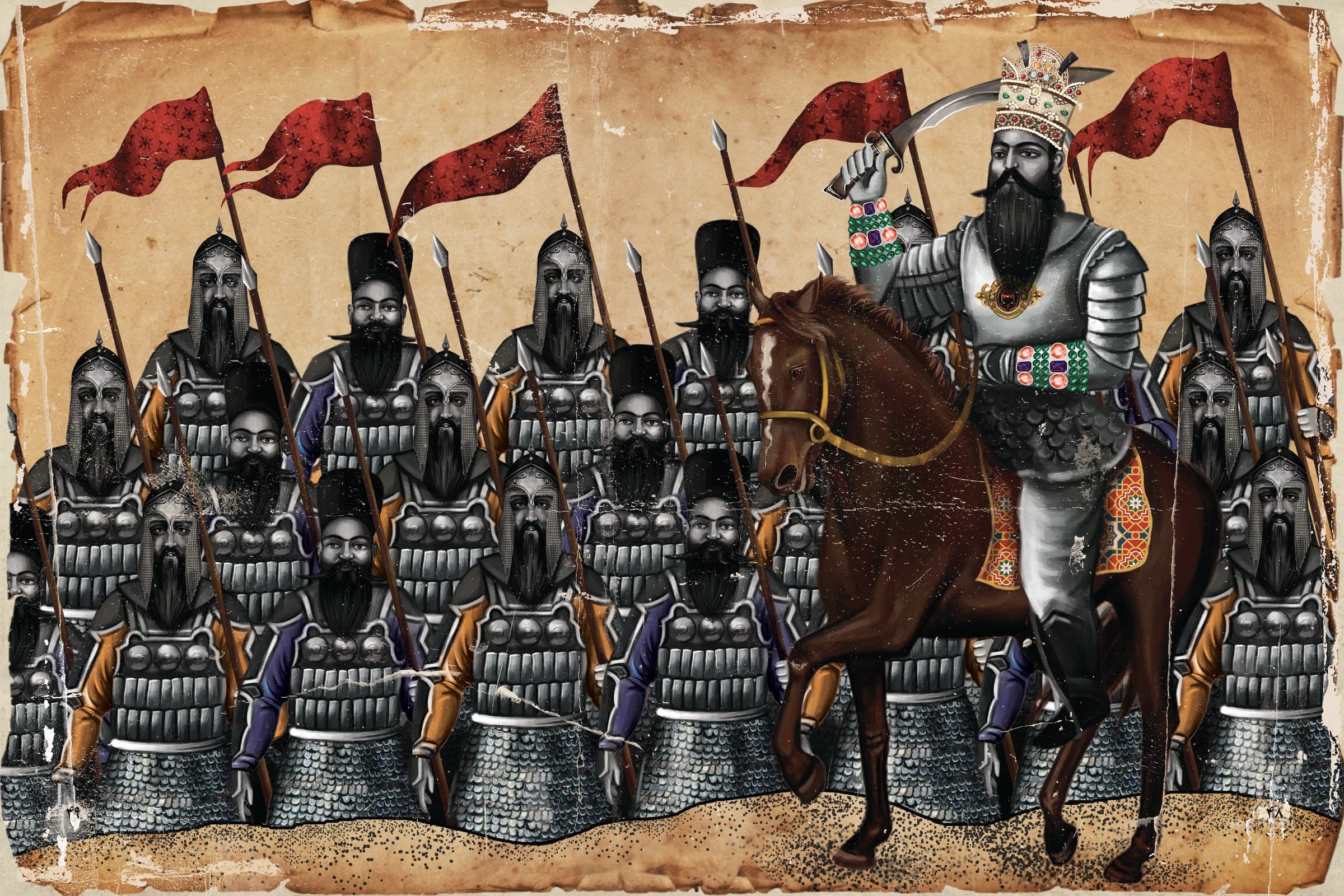
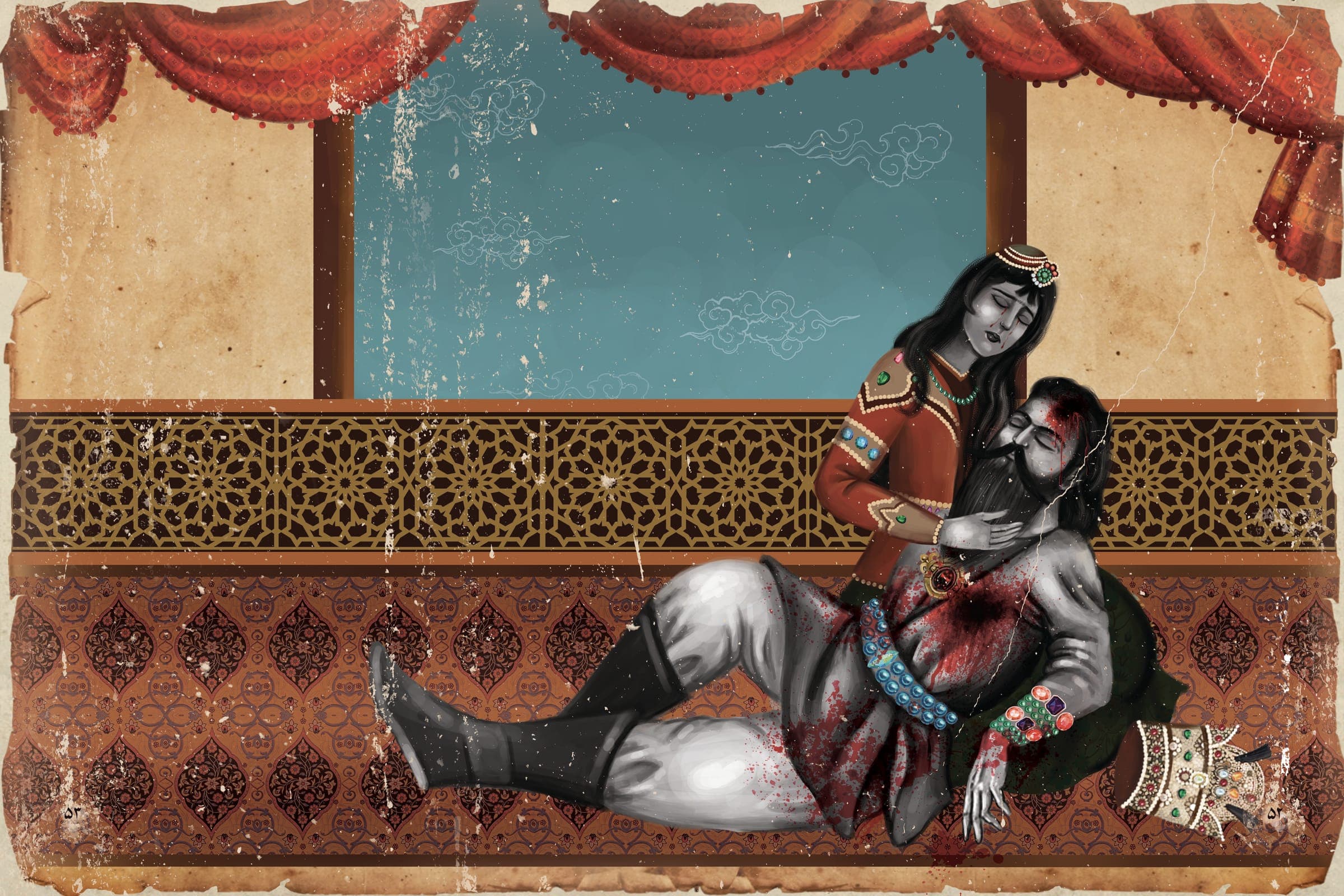
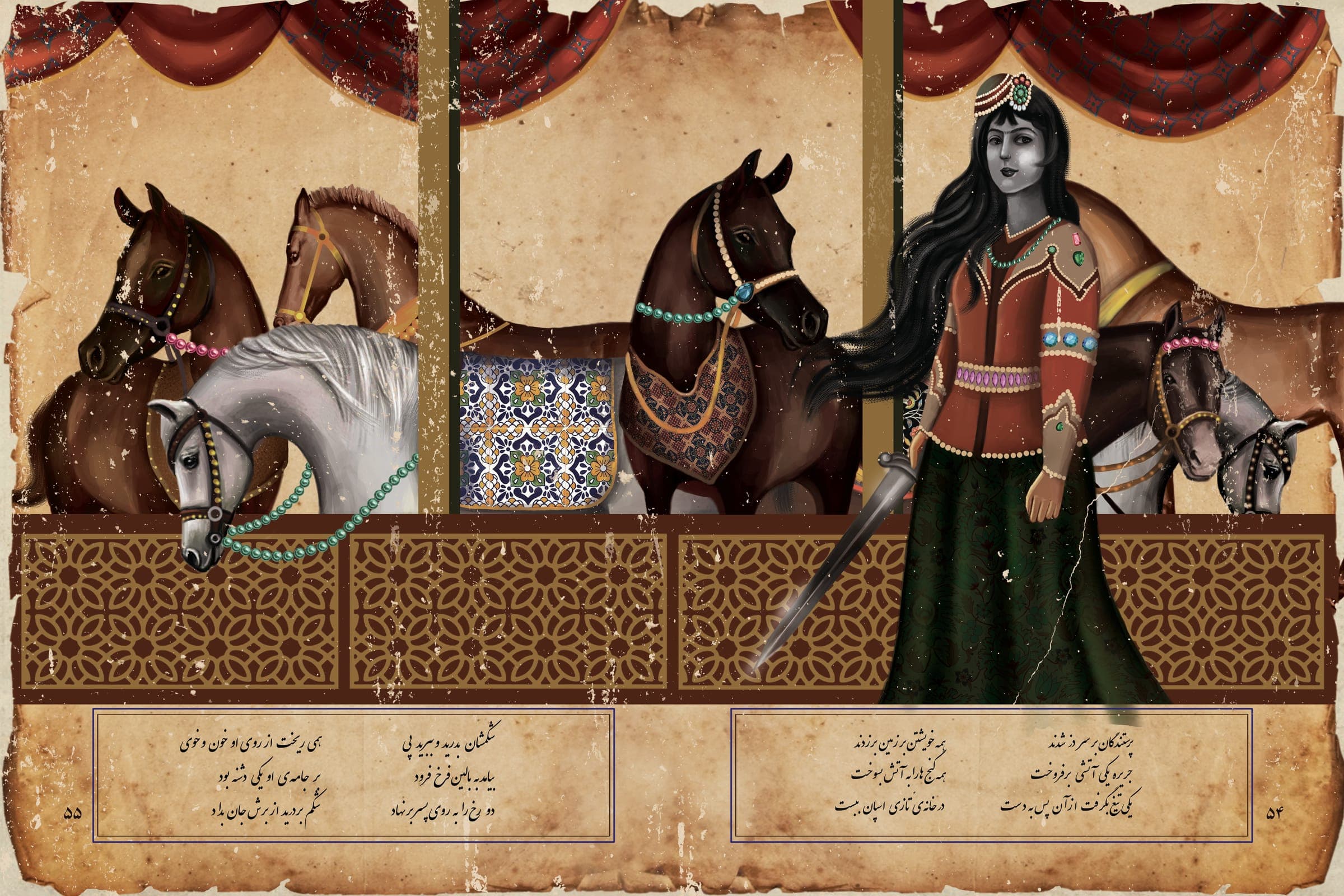
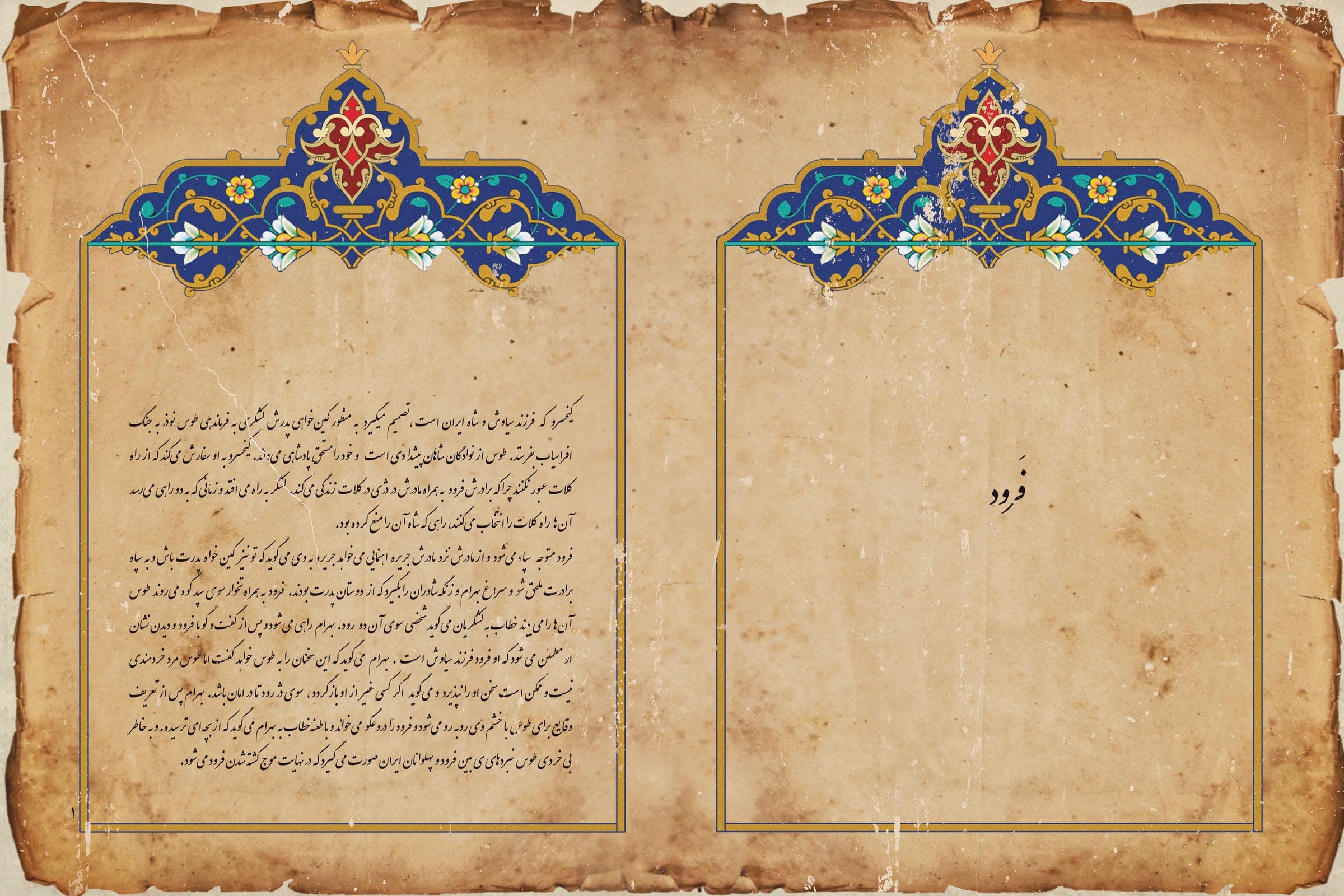
Finally, based on what I learned through this research and the visual analysis I conducted, I developed the practical part of the project by selecting a story from Ferdowsi's Shahnameh and creating my own illustrations for it, drawing inspiration from the visual style and language of the Shahanshahnama-yi Saba.
The practical project: Forud, Son of Siavash