The Bird of Fortune: Illustrating a Folktale in the Visual Language of Varqa and Gulshah
Research and illustration project
In 2024, before starting my MFA in Animation at UT Dallas, I studied the paintings of Varqa and Gulshah, one of the oldest surviving illustrated Persian manuscripts, and used their visual language to illustrate an Iranian folktale, The Bird of Fortune (Morgh-e Sa'adat). The result was a series of ten paintings on cotton fabric.
My question was simple: can the visual language of a thirteenth-century manuscript be used to tell a different story?
The manuscript
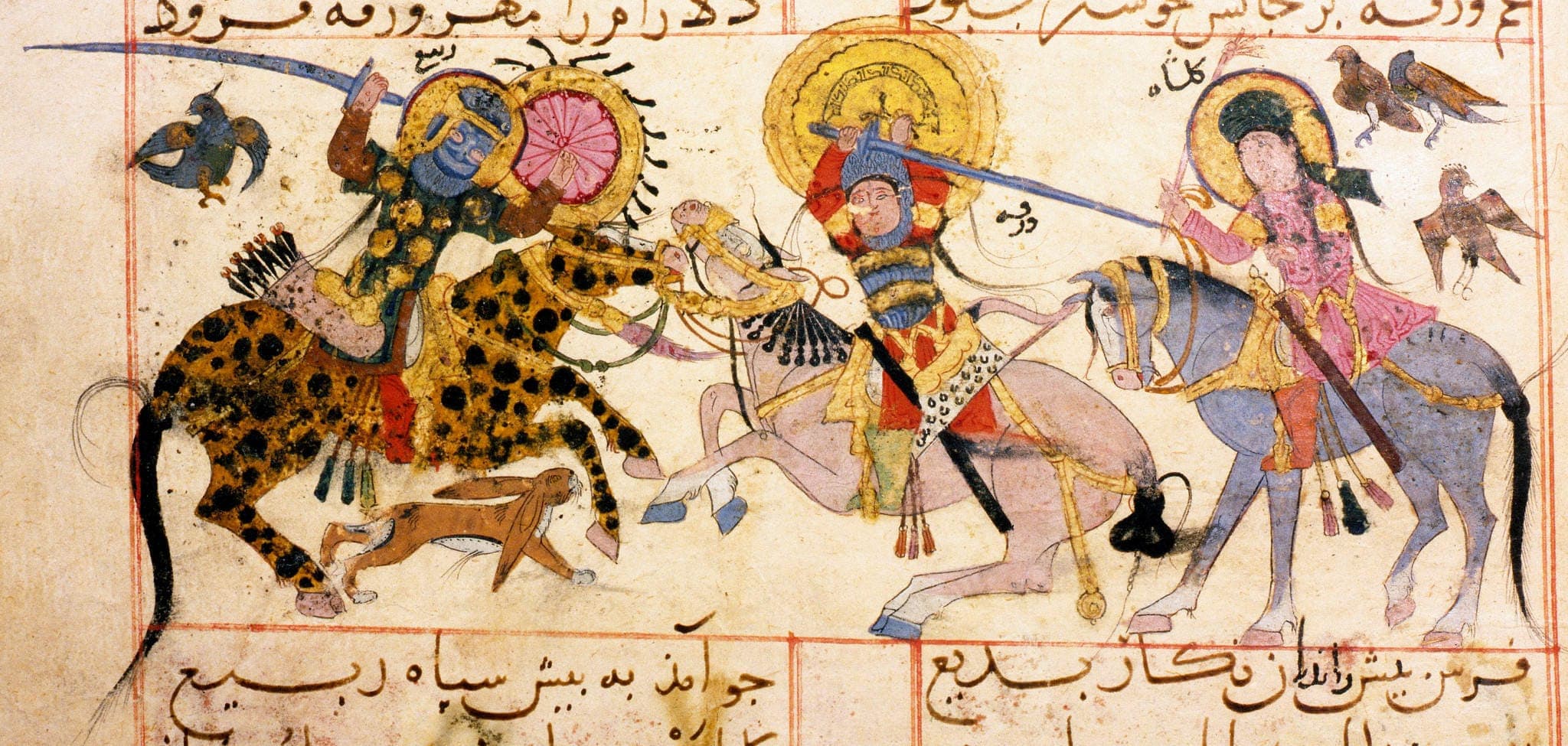
Varqa and Gulshah is a Persian love story in verse by the poet ʿAyyuqi, probably written in the early eleventh century. The poem survives in a single illustrated copy, now in the Topkapı Palace Museum Library in Istanbul (H.841). It was made in the thirteenth century, probably in Anatolia under the Seljuks of Rum, although some scholars connect it with northwestern Iran. It contains 71 paintings, and one of them carries the signature of the painter, ʿAbd al-Muʾmin ibn Muhammad al-Khuyi. His name ties him to the city of Khoy in northwestern Iran. Very few illustrated Persian manuscripts have survived from this early period, which makes this one especially valuable.
Why this manuscript
Most of what people know as Persian miniature painting comes from the later Timurid and Safavid courts, with their detailed landscapes and crowded scenes. The paintings in Varqa and Gulshah are much plainer. Coming from graphic design and illustration, I was drawn to that plainness: clear silhouettes, readable gestures, a few flat colors, and pictures meant to be read one after another. These are still the basic tools of visual storytelling, and I wanted to understand them from the inside rather than admire them from a distance.
What I found
In studying the paintings, I focused on three things.
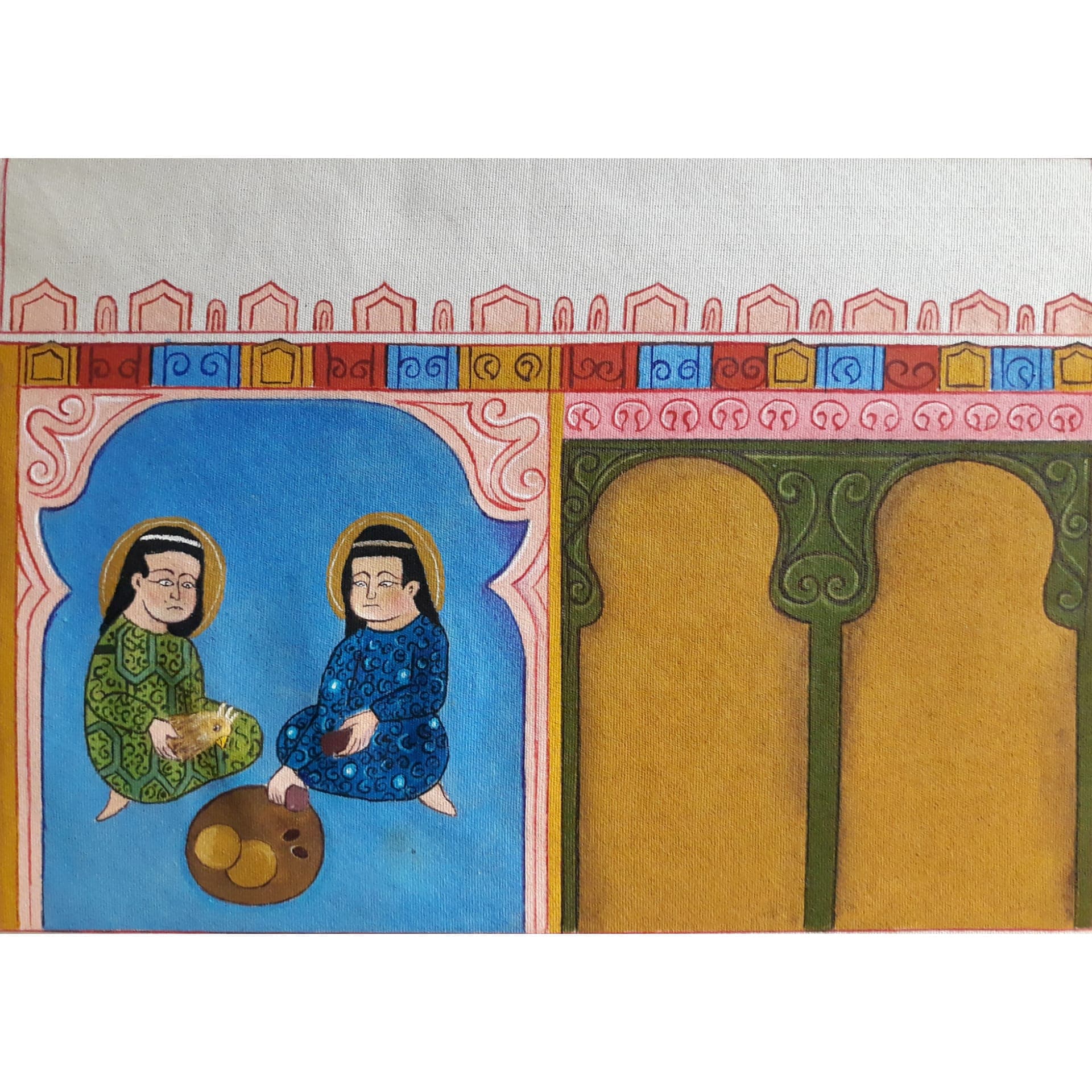
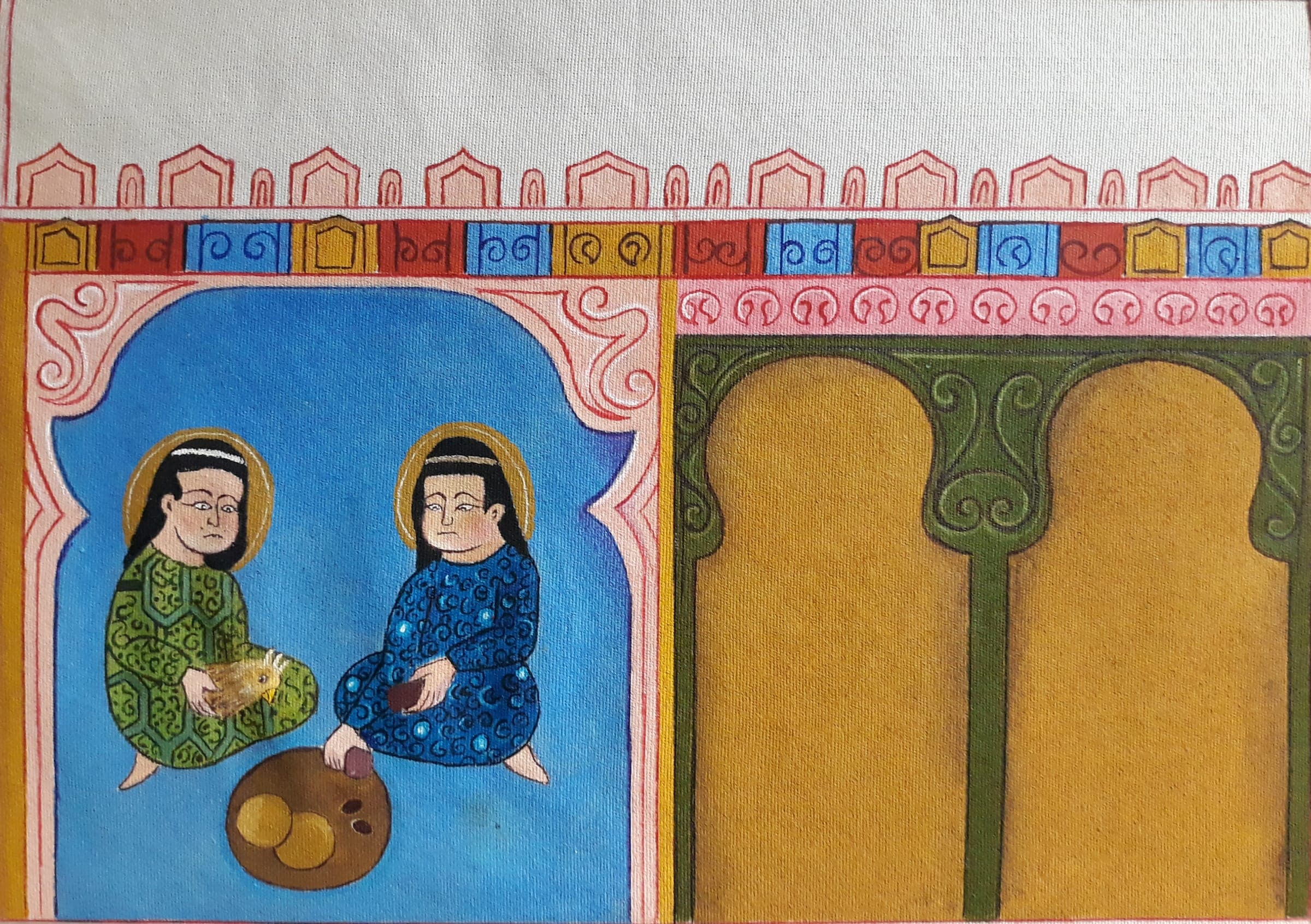
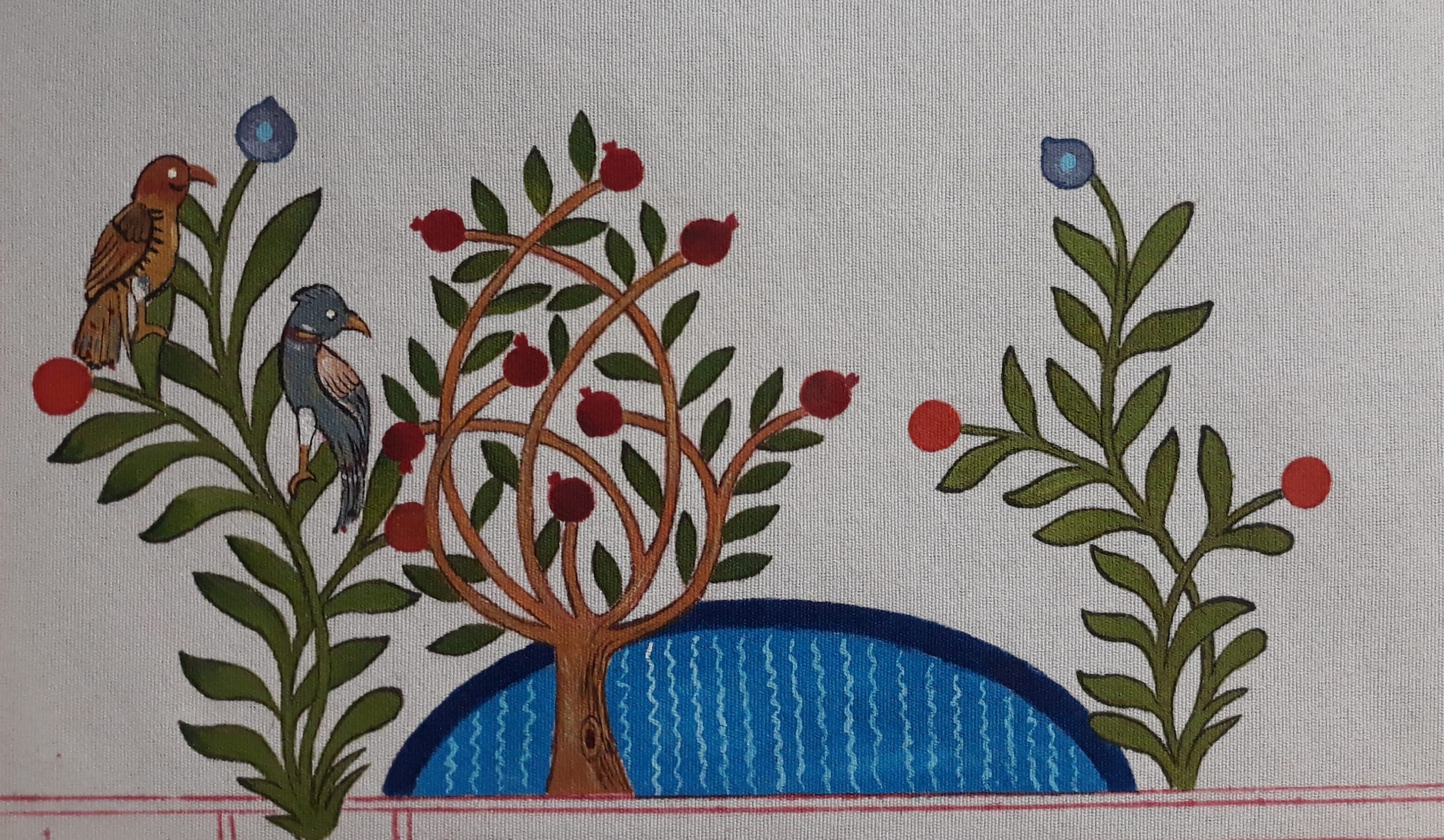
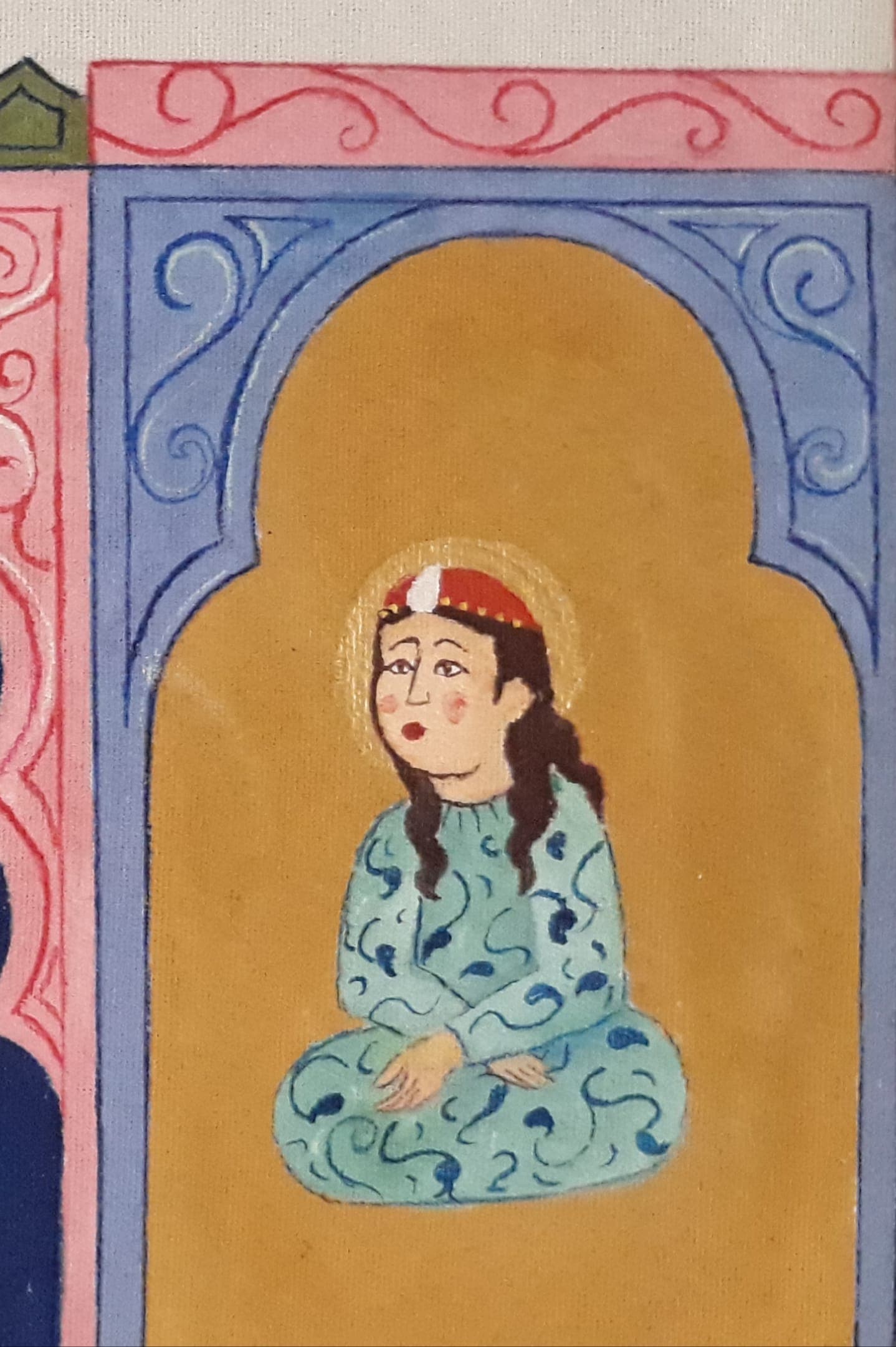
Shape language. The figures are built from a few bold forms. Faces are round and full, bodies are compact, and gestures are large and easy to read. Horses, trees, and plants turn into flat, decorative shapes.
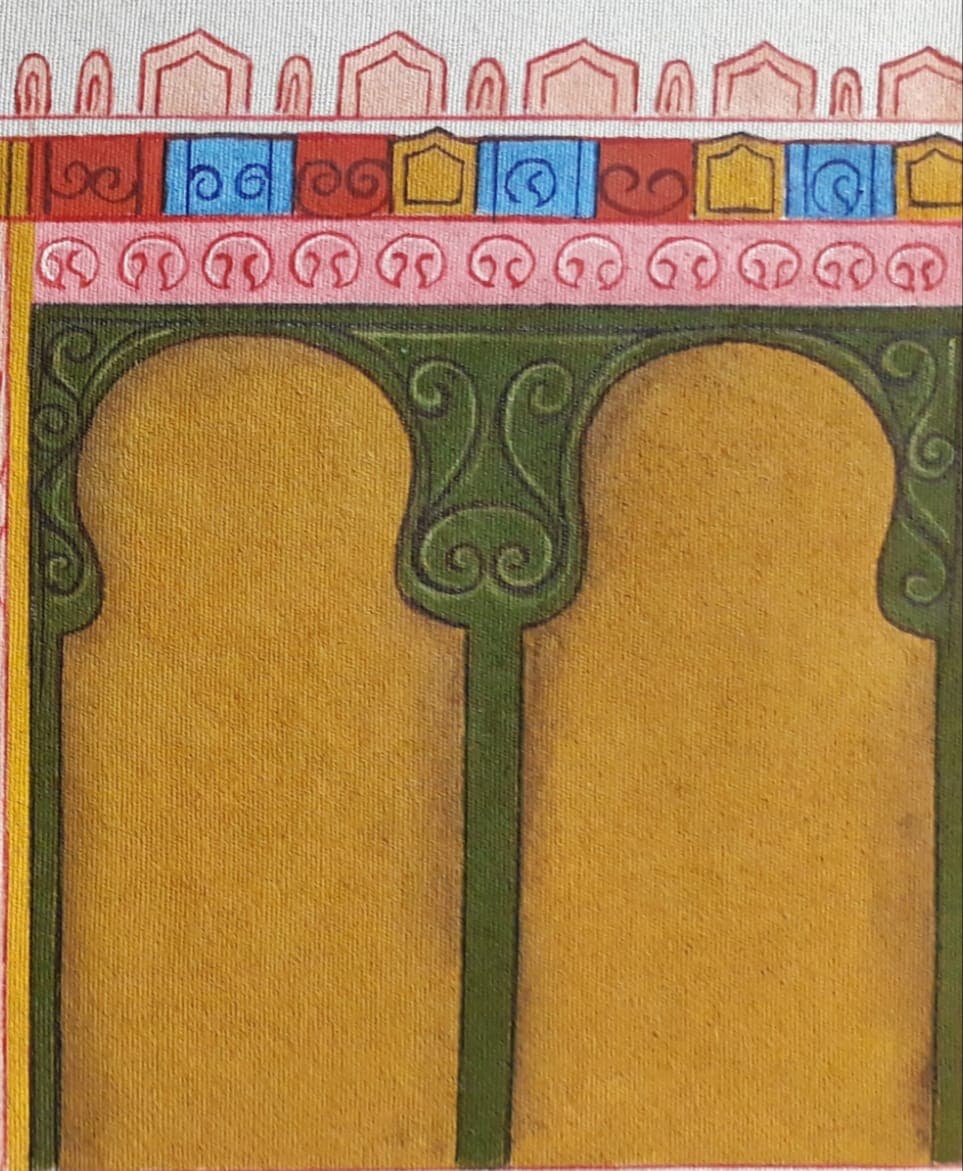
Color. The painter works with a small set of saturated colors laid down in flat areas, and some scenes are set against a gold background. Color is not used to model form or create depth. Its job is to separate the figures from the ground and to set the mood of each scene.
Composition. Nearly all the paintings sit in wide horizontal bands between lines of text. The figures stand side by side, as if on a narrow stage, and each picture shows one moment of action. Read in order, the paintings move the story forward much like the panels of a storyboard.
Taken together, these choices point in one direction. The painter gives up realism and depth in exchange for clarity. Each image is meant to be understood quickly, next to the verses it illustrates, as one step in a longer sequence. The more I looked, the less I saw the paintings as a "style" and the more I saw them as a set of rules for telling a story in pictures.
Illustrating The Bird of Fortune
For the practical part of the project, I chose The Bird of Fortune, an Iranian folktale I grew up hearing. It is a story of journeys, separation, and reunion, with many moments that can each be shown in one clear image.
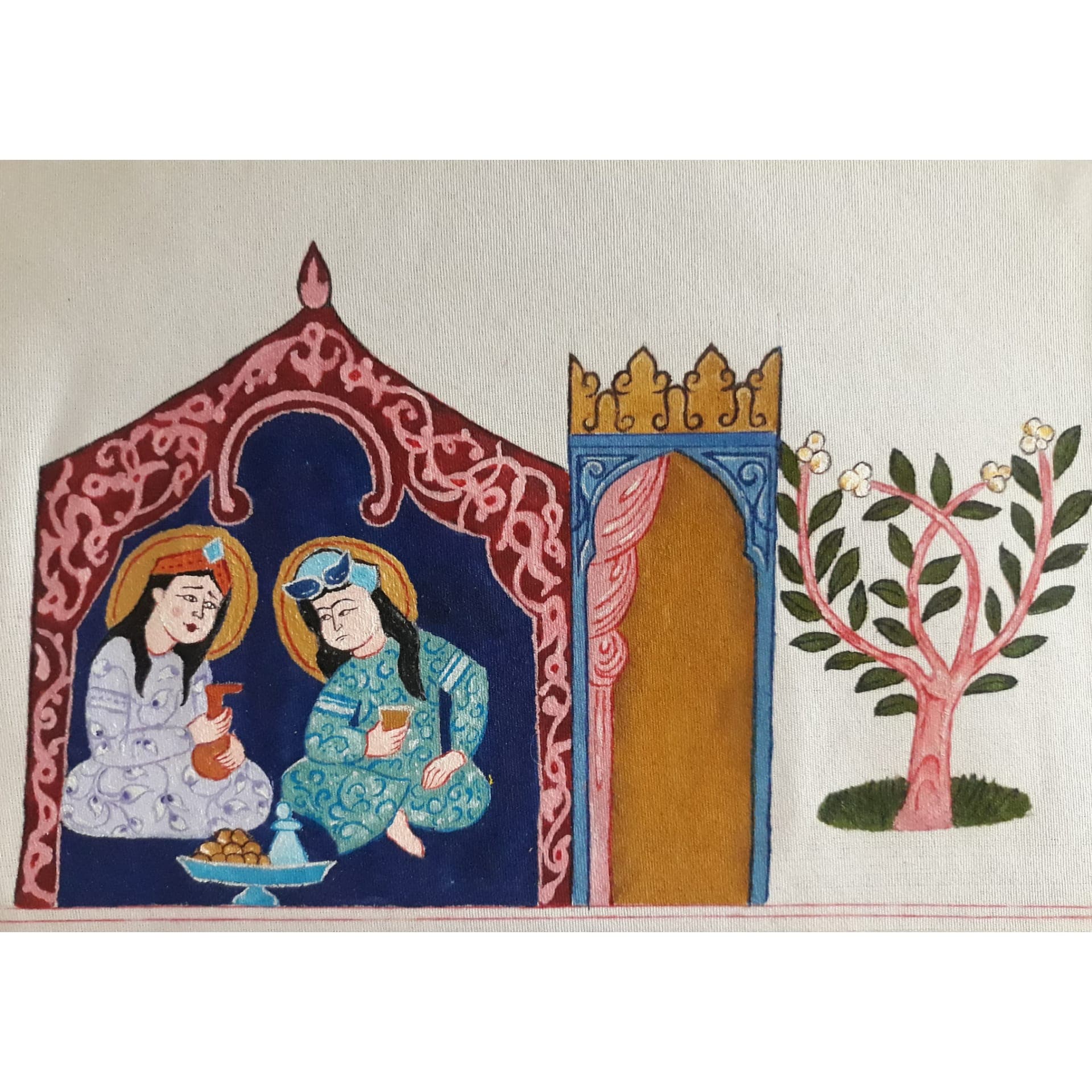
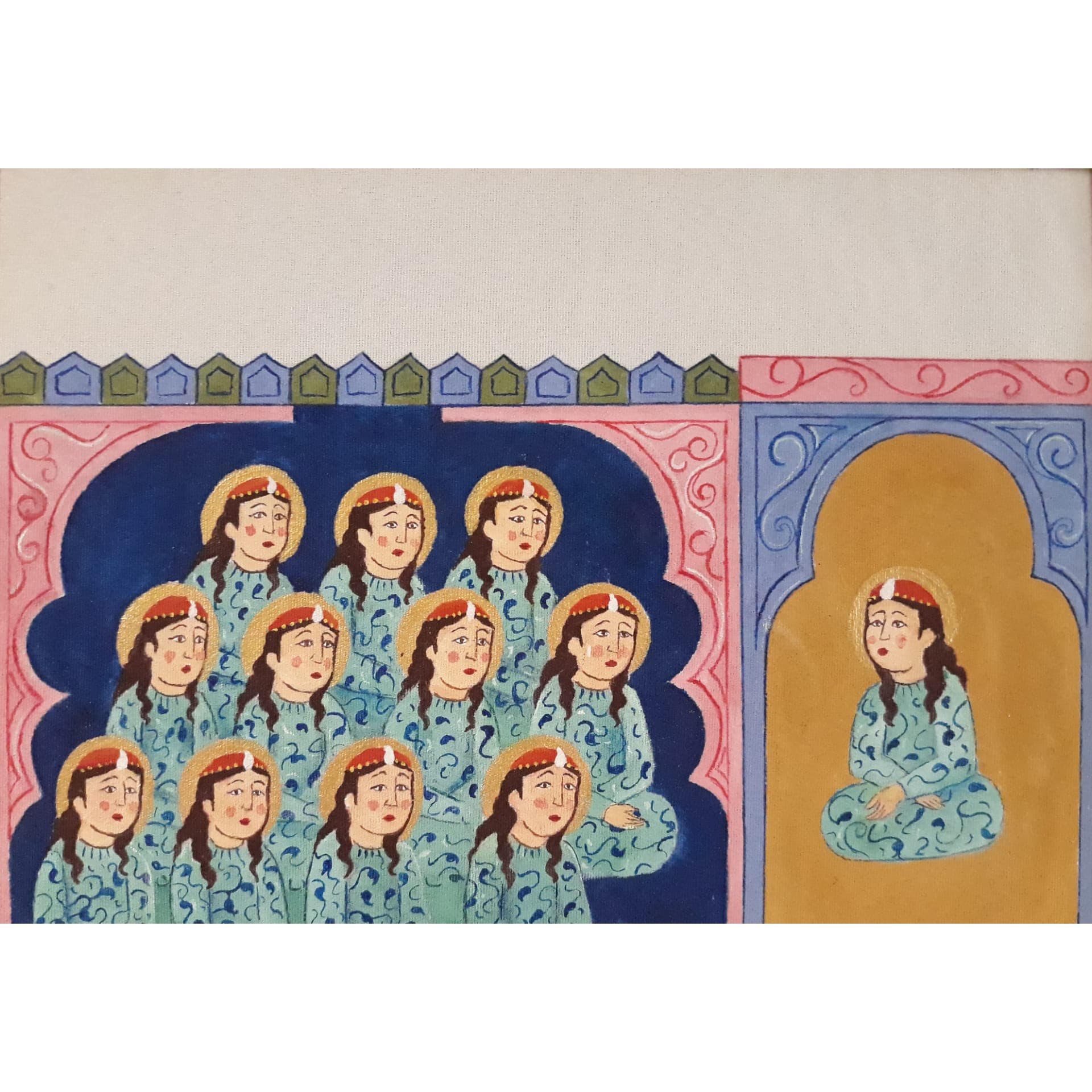
I made ten illustrations of the story. I used the shape language of Varqa and Gulshah for the figures and settings and built my palette from the colors of the manuscript. My aim was not to copy the old paintings. I wanted to use their visual language to tell a new story.
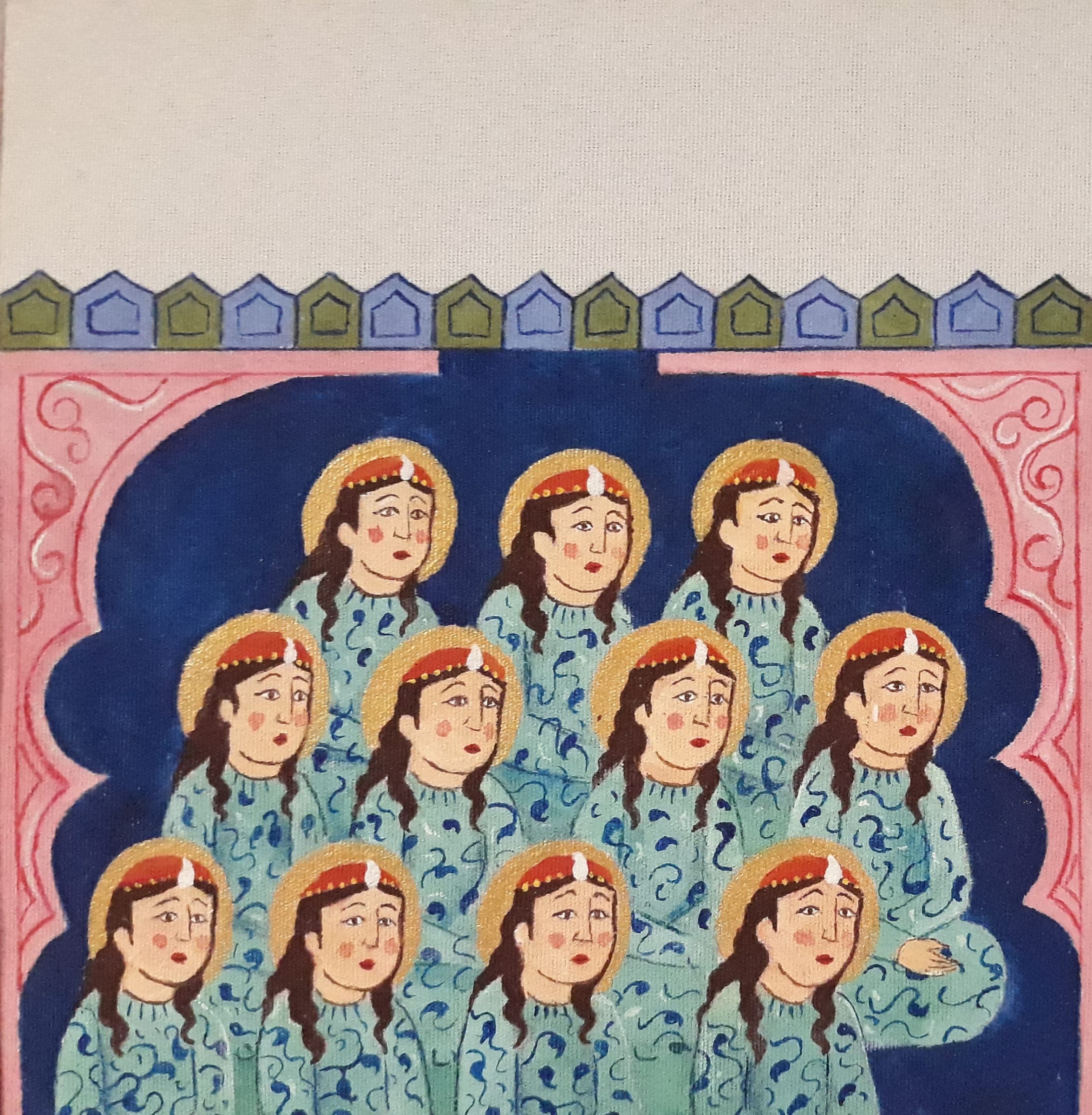
Painting on fabric
I painted the series on cotton instead of paper, and this added a second question to the project, this time about materials. Persian manuscript painters did not paint on raw paper. They first coated the sheet with a starch-based size and burnished it smoothly, so that the pigments would stay on the surface and keep their brightness. Raw cloth has the opposite problem. It soaks up paint, which dulls the color and softens the line.
Following the same principle the old painters used, I tested several mixtures and developed my own ground, which I applied to the fabric before painting. It cut down the absorption enough for the colors to stay strong and the lines to stay sharp. Here I relied on my years as a mural painter, where preparing the surface has always been part of making the image. The cloth also gave the paintings a texture and warmth that paper could not.
What I learned
This project taught me that historical visual language can be studied closely enough to be used again. Every historical tradition has its own graphic character. When that character fits a story, it can carry new narratives, including contemporary ones. I still work this way. I start with historical images and stories, study how they work, and bring what I learn into new work. Many Iranian folktales like this one were passed down by word of mouth, and illustrating them is one way I try to keep them alive.
The story in brief
A poor thorn-gatherer finds a beautiful bird that lays golden eggs. A goldsmith recognizes it as the Bird of Fortune: whoever eats its head will become a king, and whoever eats its heart and liver will find gold under his pillow every night. He talks the man's wife into cooking the bird for him, but the man's two young sons, Sa'd and Sa'id, eat those parts first and run away to save their lives. At a crossroads they are forced to part. Sa'd becomes king of a distant city when a royal falcon lands on his head. Sa'id loses his gift to a clever princess, wins it back with the help of King Solomon's magic carpet and a tree with healing leaves, and in the end finds his father and his brother again.
Selected sources
- Khaleghi-Motlagh, Djalal. "ʿAyyūqī." Encyclopaedia Iranica, vol. 3, fasc. 2, 1987, pp. 167–68.
- Melikian-Chirvani, Assadullah Souren. "Le roman de Varqe et Golšâh: Essai sur les rapports de l'esthétique littéraire et de l'esthétique plastique dans l'Iran pré-mongol." Arts Asiatiques, vol. 22, 1970, pp. 1–262.
- Porter, Yves. Painters, Paintings and Books: An Essay on Indo-Persian Technical Literature, 12–19th Centuries. Translated by S. Butani, Manohar, 1994.
- Varqa and Gulshah. Illustrated manuscript, Topkapı Palace Museum Library, Istanbul, H.841.